Executive coaching · Melbourne and online

Executive coaching that works on who you are as a leader.

For partners, managing directors and general managers whose scope has grown faster than their operating style. Before I coached, I spent 15 years inside Accenture, Deloitte and boutique consulting firms, so the rooms you work in are familiar ground.

Schedule a free call
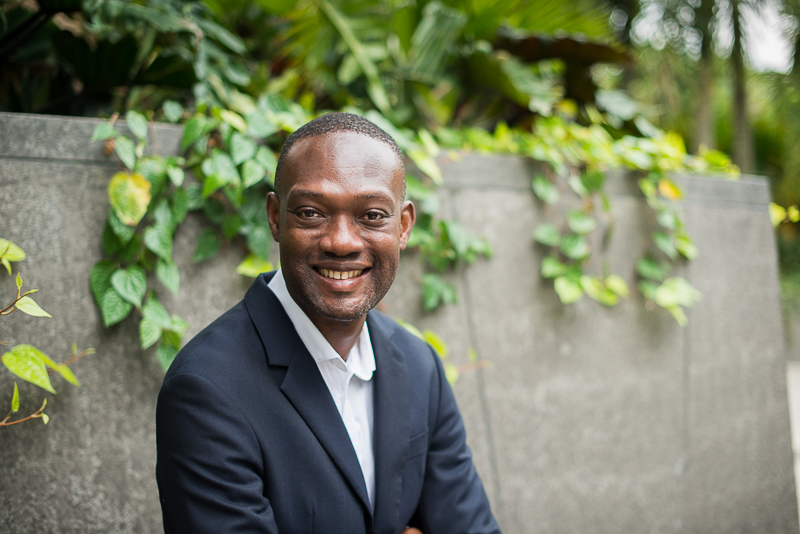
Rudi Doku, executive coach in Melbourne
What executive coaching is

A confidential partnership for how you lead under real pressure

Executive coaching is a confidential thinking partnership that helps senior leaders lead well when it counts. You bring the situations you're actually navigating, a board that's lost confidence or a decision you keep circling back to at 11pm, and we work on the situation and on whatever keeps producing it. My practice is based in Melbourne, with in-person sessions available, and online across Australia and internationally.

Good coaching does two things at once. It gives you space to think that you rarely get anywhere else, and it builds capability that stays with you, so you finish an engagement more resourced and less dependent on the coach than when you started. That distinguishes it from mentoring, where someone hands you answers out of their own experience, and from therapy, which treats clinical concerns.

Who this is for

Who executive coaching is for

Most of my clients are partners, managing directors and general managers whose scope has grown faster than their operating style. They were moved up because they were excellent at the previous version of the job, and the habits that produced that excellence have started costing more than they return. More effort won't shift them, because effort is usually what built the habit in the first place.

Often there are people across more than one country, a leadership team that needs something different from what worked before, and a level of scrutiny that makes the old workarounds visible to everyone.

The work also fits three adjacent situations.

Newly at executive level

Making the jump from running a function to leading the whole.

Founders and partners

Leaders whose own growth has quietly become the company's ceiling.

High performers under pressure

Capable people whose default under load, over-controlling or going flat, has started to cost them.

Why I do this work

Before I became a coach, I spent 15 years as a Technology Consultant and Project Leader at Accenture, Deloitte, and boutique firms across Amsterdam, Singapore, and Australia. I was good at delivery. I understood how systems behave under pressure.

What I kept seeing inside large organisations was leaders who were technically excellent and personally stretched thin. Capable people who didn't trust their own judgment, and high performers running on patterns they'd never examined. Some had built significant careers and weren't sure why it felt like so little. I also watched colleagues with genuine political savvy deliver strong outcomes for the firm and get promoted as a result.

Conventional consulting didn't have much to offer that. You'd diagnose the problem and build the deck. The organisation would nod, implement half of it, and six months later the same dynamics would be back. I got tired of treating symptoms.

That's the gap I work in.

Clients include Professional Services  ·  Pharma  ·  Mining  ·  Financial Services  ·  Technology  ·  Education
The approach

What makes this approach different

Most coaching happens entirely in language. You talk a situation through, leave with good intentions, and a fortnight later you're in the meeting where the difficult board member leans forward, and your jaw sets and your answers get clipped before he's even finished the question. Insight didn't fail you there. The reaction is stored as a state in the body, learned through years of high-stakes repetition, and it fires a beat before the thinking mind catches up.

So alongside the conversation, we work with the body directly, with the breath and the bracing, whatever your system does in the seconds before the old response takes over. We also explore what's happening in your nervous system in relation to whatever you're working on, because the options you can actually see depend on whether your system is reading the moment as safe or as a threat. Catch the shift early and you have a choice you didn't have before.

The conversational side draws on adaptive leadership and Kegan's adult development work, with polarity thinking for the tensions that never fully resolve. Dialogue and mindfulness shape the quality of the conversation, and all of it rests on the psychological safety of the room.

Behaviour what you do when it counts Thinking frameworks and meaning-making Nervous system the state that decides what's available MOST COACHING WORKS HERE THIS WORK REACHES HERE
Your nervous system state shapes which thoughts and behaviours are available to you.

This somatic and IFS-informed core sits inside a broader philosophy with its own home on this site. Somatic Leadership covers the nervous-system foundations in depth, with related pages on Somatic Experiencing and Internal Family Systems.

"The ceiling most senior leaders hit has little to do with competence. It comes down to the range of who they can be."

Rudi Doku

Focus areas

What we work on

Engagements are built around your goals, though the themes are consistent across senior leaders and tend to cluster into a few areas.

Presence and communication

Composure and weight under scrutiny, from hard conversations to board settings. This is the focus of executive presence.

Leading under pressure

Making sound calls when urgency is narrowing your thinking, and staying steady through conflict and change. This is covered in coaching for sustained pressure.

The inner game

Imposter patterns and the inner critic, along with the perfectionism that blocks delegation. All of it sits in the inner game of leadership.

Triggers and vulnerabilities

Knowing what sets you off and where you're vulnerable, then working with both before they decide how the meeting goes. This sits at the heart of somatic executive coaching.

Transitions

Stepping up to executive level, from the first ninety days to leading former peers. This is the focus of transitioning to executive leadership.

Energy management and resilience

Sustaining output without running on chronic stress, and rebuilding resilience as recovery and range.

Political savvy

Reading the informal system, and building the influence and stakeholder relationships that decisions actually run on.

Core capability

Self-awareness and emotional intelligence, the ground the rest stands on.

The engagement

How the engagement works

Every engagement starts with a free 30-minute call. We talk about what you're working with and whether the fit is right. There's no obligation on either side.

1

Establish the ground

We start by getting clear on what would make the biggest difference, sometimes with input from the people around you through a 360 such as the Leadership Circle Profile or a few stakeholder conversations. Out of this comes a small number of goals that give the engagement a spine.

2

Work the pattern

Sessions run fortnightly, in person or online. The gap is deliberate, because the real work happens out in your leadership between sessions, and what happens there becomes the material for the next conversation.

3

Consolidate

We review progress against what you came for, and finish when the change stands on its own without creating dependence on the coach.

Sessions are confidential. Where an organisation sponsors the coaching, your goals may be shared with the sponsor, and the content of sessions stays between us. That boundary is agreed explicitly at the outset so you can speak freely.

Engagements

Two ways to work together

Each runs fortnightly, in person in Melbourne or online, and each assumes real work in your leadership between sessions. The difference is scope, and how much input we gather from the people around you before we start.

Focused

Three months

Six fortnightly sessions. Built for one transition, or one pattern that has started costing you something specific.

  • Goals set in the first session from what you already know
  • No assessment, so we start on the material straight away
  • Sessions to be used within four months

$3,300 self-funded, plus GST

$4,500 organisation-sponsored, plus GST

Where your organisation is funding the work, I can provide a scoped proposal with the structure, duration and a single engagement figure, which is usually what a purchase order needs. Per-session fees are set out on the executive coaching cost page, and what to expect from coaching walks through the mechanics of an engagement.

Before you commit

The questions leaders actually ask

I'll have six good conversations and nothing will actually change

Goals go in writing by the second session and get reviewed at the midpoint and at the close. Sessions work on something live from your current fortnight, which is why the gap between them matters. What happens out in your leadership becomes the material for the next conversation.

My sponsor will hear what I say in that room

Where an organisation is sponsoring, your goals may be shared with the sponsor. What you say in a session stays between us. That boundary is agreed in writing before the first session, so you can speak freely from the start.

I'll spend six months and have nothing to show for it

The six-month engagement includes a written review at the halfway point, measured against the goals set at the beginning. Where you want outside evidence, a short check-in with two or three of the people who see you lead will tell you whether anything has moved for them.

A coach won't understand the rooms I'm in

I spent 15 years as a technology consultant and project leader at Accenture, Deloitte and boutique firms across Amsterdam, Singapore and Australia before I coached anyone, then several years at Standard Chartered working with Executive Directors across the bank's global footprint. The pressure in those rooms is familiar from the inside.

I don't know what I'd even bring to a session

That is what the first phase is for. We get clear on what would make the biggest difference, and where you want input from outside your own read, a Leadership Circle Profile or a handful of stakeholder conversations gives you a starting point that isn't guesswork.

This is going to turn into therapy

The frame stays coaching throughout. The work is about performance and self-regulation for capable people under pressure, and it does not diagnose or treat any condition. My training includes somatic and trauma-informed work, which means sessions stay aware of how stress shapes the way you lead. If you are dealing with significant distress, that deserves proper psychological or medical care, and coaching can sit alongside it.

Where we work

In person in Melbourne and online

Melbourne

In-person sessions run in Melbourne, an easy reach for leaders in the surrounding suburbs and the CBD. Many clients alternate between in-person and online across an engagement.

Online

Online sessions run across Australia and internationally, including Singapore and the wider Asia-Pacific. The work translates fully to video, somatic elements included.

Credentials and training

About Rudi

Coaching

Integral CoachNew Ventures West

Professional Certified Coach (PCC)International Coaching Federation

Growth Edge CoachingCultivating Leadership

Subject Object InterviewMinds at Work

Communications and Executive Presence CoachStand & Deliver

Executive Master in ChangeINSEAD

Leadership and development

Transformation FacultyMobius Executive Leadership

Adaptive LeadershipHarvard Kennedy School & Kansas Leadership Centre

Action LearningWorld Institute for Action Learning

Gestalt Group DynamicsDr David Lines, Relational Change

Group Relations ConferencesParticipant

Dare to LeadBrené Brown / Brave Leaders Inc.

Adult DevelopmentBob Kegan

Mature Masculine SoulMobius Executive Leadership

Advanced Systemic IntelligenceMobius Executive Leadership

Assessments and instruments

Leadership Circle ProfileAccredited practitioner

Key Polarity IndexAccredited practitioner

Structural DynamicsAccredited practitioner

Somatic and psychological

Somatic Experiencing Practitioner (SEP)Somatic Experiencing International

Internal Family Systems (IFS)Level 1 trained

Polyvagal-informed practicePolyvagal Institute

What becomes possible

Self-trust under pressure

Judgment you can rely on when the stakes are high, and confidence that doesn't depend on how the room is reading you.

Greater range

The ability to stay warm and direct in the same conversation, including the one you've been putting off for a month.

Clarity on what matters

A sharper sense of what you're building toward and why, which changes what you say yes to.

Patterns that shift

You notice the old response arriving, and do something different while the moment is still live.

Scope

A grounded note on scope

This is coaching. The work is about performance and self-regulation for capable people under pressure, and it stays outside the territory of diagnosis and treatment. If you're dealing with significant distress or a mental health concern, that deserves proper psychological or medical care, and good coaching can work alongside that care.

Coaching also works best when you're motivated to change and willing to put real time into the work between sessions. No outcome is guaranteed. What the work gives you is better access to capacities you already have.

Common questions

Frequently asked questions

What is executive coaching?

Executive coaching is a confidential partnership that helps senior leaders lead more effectively, navigate pressure and transition, and grow in ways that last. Advice plays a smaller part than people expect, and the bigger work is creating the conditions for you to see your own patterns clearly and widen the range of how you lead.

What is integral coaching, and how does it differ from typical executive coaching?

Integral coaching works with the whole person. Alongside standard leadership frameworks, it draws on adult development and on somatic work with the nervous system, because that's where reactivity under pressure actually lives. The aim is durable change in who you are as a leader.

Who is executive coaching for?

Most of my clients are partners, managing directors and general managers whose scope has grown faster than their operating style. I also work with newly appointed executives, founders scaling past their first leadership team, and high performers whose default under pressure has started to cost them.

My organisation would be funding this. What do you provide?

A scoped proposal covering the engagement structure, duration and a single total figure, which is what most finance and procurement processes need. Your goals may be shared with the sponsor. The content of sessions stays between us, and that boundary is agreed in writing before the first session.

How is executive coaching different from therapy?

Coaching is oriented to the present and future, and focused on leadership and growth. It is not a treatment for mental illness. Because my training includes somatic and trauma-informed work, sessions stay aware of how stress and past experience shape how you lead, while the frame remains coaching.

What makes your coaching somatic and trauma-informed?

Alongside leadership frameworks and adult development, I draw on Somatic Experiencing, Internal Family Systems, and polyvagal-informed practice. That means we can work with how a challenge lives in your body and nervous system as well as how you think about it, which is often where reactivity and burnout actually sit.

Can executive coaching help with burnout and performance under pressure?

Yes. Performance under pressure and burnout are partly nervous system states. Coaching that combines leadership strategy with nervous-system awareness helps you recover capacity and lead without running on chronic stress. That work is set out in resilience for executives.

How much does executive coaching cost?

There are two engagement shapes, a focused three-month version and a full six-month version, each priced differently for self-funded and organisation-sponsored work. The executive coaching cost page has the fuller breakdown, and the free call is where we work out which fits your situation.

Do you offer executive coaching in Melbourne and online?

Yes. In-person sessions run in Melbourne for leaders in the surrounding suburbs and the CBD, and online sessions run across Australia and internationally. Online coaching is as effective for this work, so most leaders choose whichever fits their week.

Book a free call

Start with a free 30-minute conversation to see whether working together makes sense.

Schedule a free call