Executive Coaching Melbourne | Rudi Doku
Executive Coaching Melbourne

Most coaching changes what you do. This works on who you are.

For senior leaders and high-performing professionals who've built the external career, and are ready to work on what's underneath it.

Schedule a free call
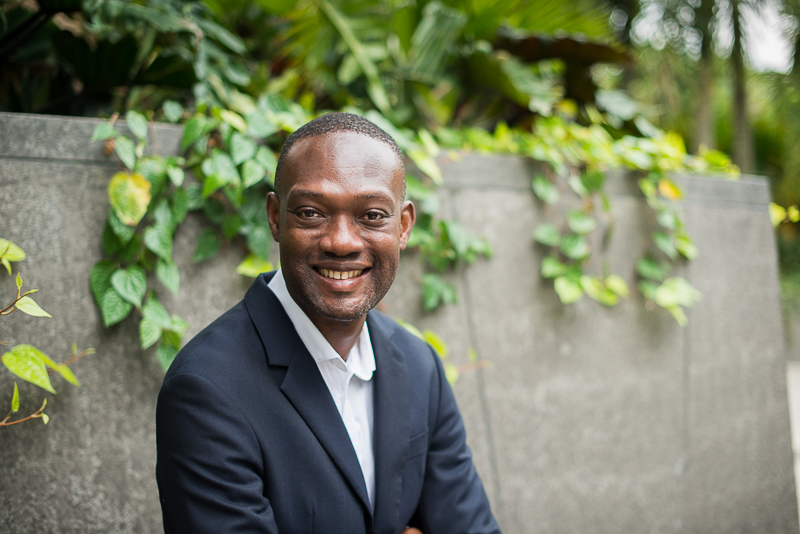
Rudi Doku, executive coach in Melbourne
Who this is for

You're accomplished. People around you see competence and capability. But there's a version of yourself at work that feels more managed than genuine, performing under pressure in ways that cost you more than they used to.

Maybe you've hit a ceiling that has nothing to do with skills. You've read the books, done the training, and you're still reacting in the same patterns. Or something has shifted: a new role, a restructure, a quiet change in what you actually want, and what got you here won't get you through.

Senior leaders in transition

New scope, new stakeholders, or a shift in what the role demands of you as a person, not just a professional.

High performers at a ceiling

Technically strong, well-regarded, but aware that the next level requires something different from you.

Leaders under complex pressure

Navigating ambiguity, conflict, or change at scale, and feeling the personal cost of it.

Professionals reconsidering direction

Questioning not just what to do next, but who they want to be in their working life.

Why I do this work

Before I became a coach, I spent 15 years as a Technology Consultant and Project Leader at Accenture, Deloitte, and boutique firms across Amsterdam, Singapore, and Australia. I was good at delivery. I understood systems, complexity, and pressure.

What I kept seeing, inside large organisations, on long projects, in the rooms where decisions got made, was leaders who were technically excellent and personally stretched thin. Capable people who didn't trust their own judgment. High performers running on patterns they'd never examined. People who had built significant careers and weren't sure why it felt like so little.

Conventional consulting didn't have much to offer that. You'd diagnose the problem, build the deck, run the workshop. The organisation would nod, implement half of it, and six months later the same dynamics would be back. I got tired of treating symptoms.

That frustration is what took me to INSEAD. The Executive Master in Consulting and Coaching for Change is eighteen months across eight modules, deep dives into the hidden drivers of human behaviour and the dynamics that organisations rarely acknowledge out loud. At the same time, I was flying to San Francisco to train as an Integral Coach at New Ventures West. INSEAD gave me the theoretical architecture; New Ventures West gave me the practice: how to actually sit with someone and work at the level that matters.

Running alongside all of this, from 2013 to 2015, I studied Gestalt Group Dynamics with Dr David Lines at Relational Change. That work changed something. Gestalt isn't just a methodology. It's a way of attending to what's happening in a room right now, beneath the stated agenda. Working with David opened up my understanding of how groups actually function: the unconscious roles people take up, the dynamics that form and repeat without anyone choosing them, the way authority and belonging play out in ways that no org chart captures. I also attended group relations conferences during this period, which took that understanding into live, often uncomfortable territory.

From there I joined Standard Chartered Bank in Singapore as a Leadership Facilitator, working with Executive Directors across the bank's global footprint on the capability side of large-scale transformation. To deepen my thinking on leadership specifically, I studied Adaptive Leadership with Ron Heifetz at Harvard Kennedy School and the Kansas Leadership Centre, a framework that finally gave precise language to something I'd been observing for years: the difference between problems that need expertise and challenges that require the leader to change. Around the same time I completed Dare to Lead with Brené Brown, which grounded the emotional and relational dimensions of leadership in a way that was both rigorous and practically useful. It was the first time I was paid to work on the human dimensions of change rather than around them.

Moving to Melbourne and starting over stripped everything back. I lost the scaffolding I'd been leaning on: the title, the context, the sense of knowing where I stood. What was left was harder to look at. Things I'd been too busy, or too far from home, to face.

That experience gave me something all those years of boardrooms hadn't: the inner life doesn't stay separate from the professional life. It leaks. It shows up in how you lead, how you make decisions, how you hold yourself when things get hard.

What I kept seeing in organisations was coaching that skipped this entirely. A leader struggling with conflict, with their team, with their own authority, and the response was a framework. A new communication model. A feedback structure. Useful. Not enough. The relational and emotional dimensions, the parts that actually show up under real pressure, kept getting treated as too messy, or not the job.

That's the gap I work in.

Clients include Accenture  ·  Deloitte  ·  SAP  ·  INSEAD  ·  Professional Services  ·  Pharma  ·  Mining  ·  Financial Services  ·  Tech  ·  Education
The approach

Integral coaching works with the whole person, not just behaviours and goals. Most coaching asks what you need to do differently. This one also asks what you need to understand about yourself to actually do it, and keep doing it.

Sessions draw on whatever's most useful for what you're working with. Adaptive leadership frameworks help you tell the difference between a technical problem and an adaptive one, the kind where the situation isn't the problem, you are. Kegan's work on adult development maps the stages of meaning-making and what each one asks of you. Somatic and body-based approaches reach what thinking alone can't. Polarity work helps you navigate the tensions that won't resolve, only be managed.

"The ceiling most senior leaders hit isn't about competence. It's about the range of who they can be."

Rudi Doku
Credentials and training

Coaching

Integral CoachNew Ventures West

Professional Certified Coach (PCC)International Coaching Federation

Growth Edge CoachingCultivating Leadership

Subject Object InterviewMinds at Work

Communications and Executive Presence CoachStand & Deliver

Executive Masters in ChangeINSEAD

Leadership and development

Adaptive LeadershipHarvard Kennedy School & Kansas Leadership Centre

Gestalt Group DynamicsDr David Lines, Relational Change

Group Relations ConferencesParticipant

Dare to LeadBrené Brown / Brave Leaders Inc.

Adult DevelopmentBob Kegan

Mature Masculine SoulMobius Executive Leadership

Advanced Systemic IntelligenceMobius Executive Leadership

Assessments and instruments

Leadership Circle ProfileAccredited practitioner

Key Polarity IndexAccredited practitioner

Structural DynamicsAccredited practitioner

Somatic and psychological

Somatic Experiencing Practitioner (SEP)Somatic Experiencing International

Internal Family Systems (IFS)Level 1 trained

Polyvagal-informed practicePolyvagal Institute

What becomes possible

Self-trust under pressure

Steadier judgment when the stakes are high. Less noise in your own head. Confidence that doesn't depend on how the room is reading you.

Greater range

More of yourself available: more flexibility, more presence, more authority that actually lands.

Clarity on what matters

A sharper sense of what you're building toward, and why. At work and beyond it.

Patterns that shift

Not just insight into why you do what you do, but actually doing something different when it counts.

Rudi Doku

Book a free call

Start with a free 30-minute call. No pitch, just a conversation to see if working together makes sense.

Schedule a free call